
The current version of the Concrete Standard defines ‘design life’ in Section 4 “Design for Durability” as 50 years ± 20% (which translates to 40 to 60 years, which is how it was expressed in the 1988 version of AS3600).
It is interesting to read the definition of ‘Design life’ in Section 1.6 of AS3600 -2018, where it states “Period for which a structure or structural element is to remain fit for use for its designed purpose with maintenance”. The key word in that definition of design life is “maintenance”. A structure that is designed and built correctly and then maintained regularly can easily extend its design life beyond 60 years.
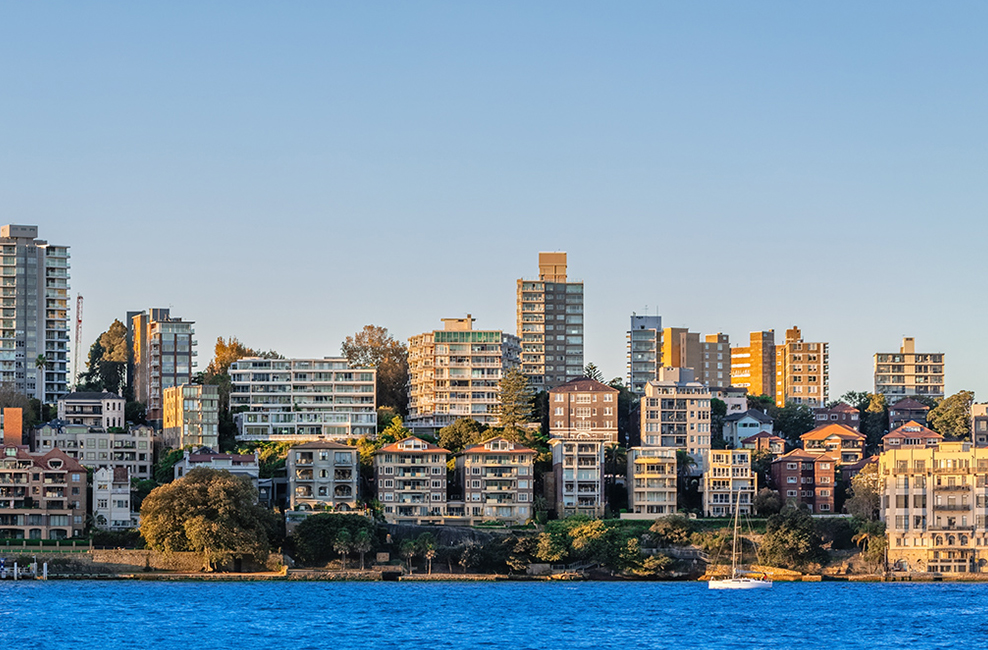
There are many reinforced concrete structures (particularly mid to high rise apartments) along the coastline of Australia that either are approaching or have exceeded the 60-year period (in particular the Gold Coast, Sydney and Melbourne). Keep in mind that the term “coastal zone” is not just structures along the coastline but is defined by AS3600-2018 as “locations within 1 km of the shoreline of large expanses of saltwater”. This obviously includes areas such as structures inside Sydney Harbour, or in Perth (on Swan River) or in Brisbane (on Brisbane River).
When older apartment buildings are occupied by residents who have to constantly spend money on rates, strata levies, and general maintenance, the decision to spend more money on ‘preventative maintenance’ relating to durability of the structure is often questioned. Indeed, there are scenarios where despite the fact that professional engineering guidance has been sought on what tests should be conducted in the present (to ensure the structure will be in a sound condition in the future), the resulting guidance is either debated vigorously or ignored completely by the building’s body corporate.
Unfortunately, it appears that many Body Corporates are resistant to investigative measures in checking their buildings for long term durability.
The two relevant tests for durability are (i) the degree of carbonation that the structure has suffered, and, (ii) the amount of chloride ions that have diffused into the concrete by being exposed to a salt water environment.
Chloride ingress and carbonation of the concrete surrounding the reinforcing steel can be a major contributor to the failure of a structure – especially if concrete cover was compromised during construction). It must also be mentioned here that 50 years ago the most common grades of concrete used in all construction (even near the ocean) was either 25 MPa or 30 MPa (revised later to 32 MPa). If those same structures exposed to the sea were built today, the concrete grades required would be at least 40 MPa (minimum).
Since the tragic Champlain Towers incident in Miami, Florida last year, authorities in the USA are now scrutinizing many ‘older’ structures (and balconies) built along water ways.
With that in mind, we certainly don’t want people to suffer the same fate as those in the Champlain Towers just because ill-informed strata committees do not heed the advice from engineers and building professionals warning them of potential failures if older buildings are not checked for durability.
That is why it is important to keep abreast of Standards and Engineering Design Procedures by attending workshops and courses such as those conducted by the Engineering Training Institute of Australia. For more information, please visit: https://www.etia.net.au/
This blog is the first in a series produced for Construction Engineering Australia by globally respected engineering educator and reinforced concrete specialist, PAUL UNO BE MBdgSc MIE(Aust) CPEng NER RPEQ APEC Engineer IntPE(Aus), Director, ETIA (Engineering Training Institute Australia).