
The Anindilyakwa people of the remote Groote Archipelago have embarked on a remarkable transformation as they counter the forthcoming forfeiture of royalty revenue from the winding-down manganese mine, which has been the mainstay of their economy for 58 years. In a determined effort to safeguard their land, language, and culture while seeking profitable economic prospects, they are diving deep into the Blue Economy.
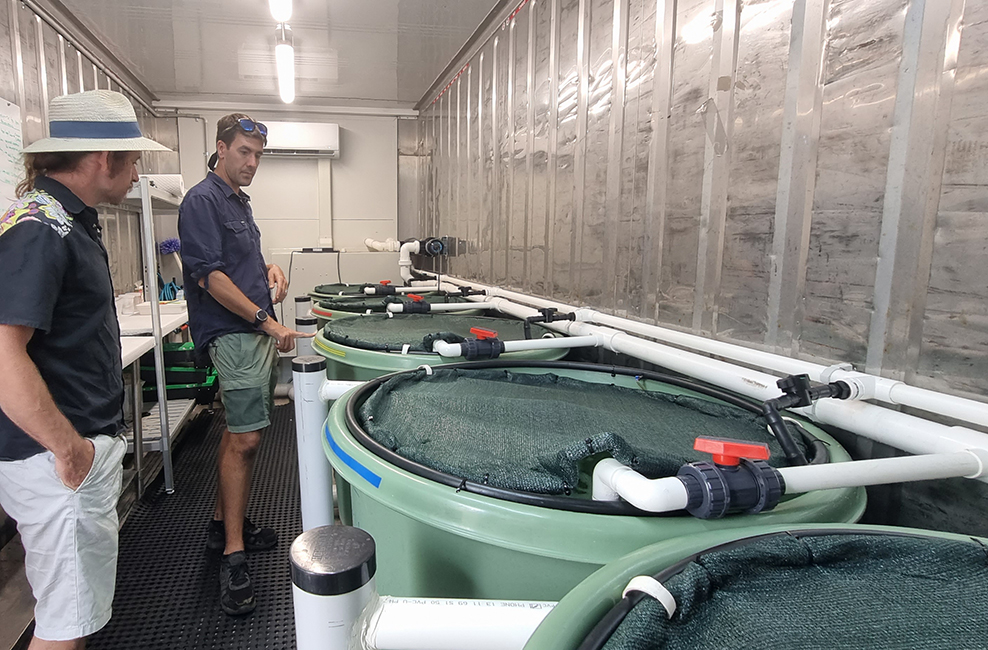
In what is being seen as a significant step in this transformative journey, the Groote Aqua Aboriginal Corporation (GAAC), under the stewardship of the Anindilyakwa Land Council (ALC), has partnered with the Northern Hub to initiate a pioneering aquaponics system on Groote Eylandt.
The aquaponics system, funded by the Northern Hub through the Australian Government’s Future Drought Fund, represents a shift from traditional soil-based farming to a water-based cultivation method that harnesses the Archipelago’s pristine aquatic environment and crystal-clear waters. This innovative approach aligns with the community’s aspirations of respecting local resources, creating a carbon offset economy, providing food security, optimising nutrition, and striving for self-sufficiency.
We, the Anindilyakwa people are Saltwater People. For us, our country is not just the land but also the sea that surrounds it to the horizon and beyond. That is our country. My father used to say – ‘The sea is our supermarket’ – Tony Wurramarrba, Chairman of the Anindilyakwa Land Council.
The Groote Eylandt aquaponics system is set to revolutionise agricultural practices in the region. By combining aquaculture and hydroponics into one integrated system, the project will cultivate a diverse range of vegetables and leafy greens alongside freshwater delicacies such as barramundi, cherrabin prawns, and red claw crayfish.
In addition to its agricultural benefits, the project holds numerous advantages for the Anindilyakwa community and the broader region. It will contribute to economic resilience and autonomy, foster the growth of the Blue Economy, ensure sustainable food security, and align with the cultural and land values of the Anindilyakwa people. Moreover, the project will empower community members, create employment opportunities, and facilitate infrastructural expansion for a stable food supply. It will also serve as a valuable training centre, fostering skill development and training in sustainable development practices.
This ground-breaking system is expected to be operational by mid-year, with first-year yield reports and learnings due in June 2024.