
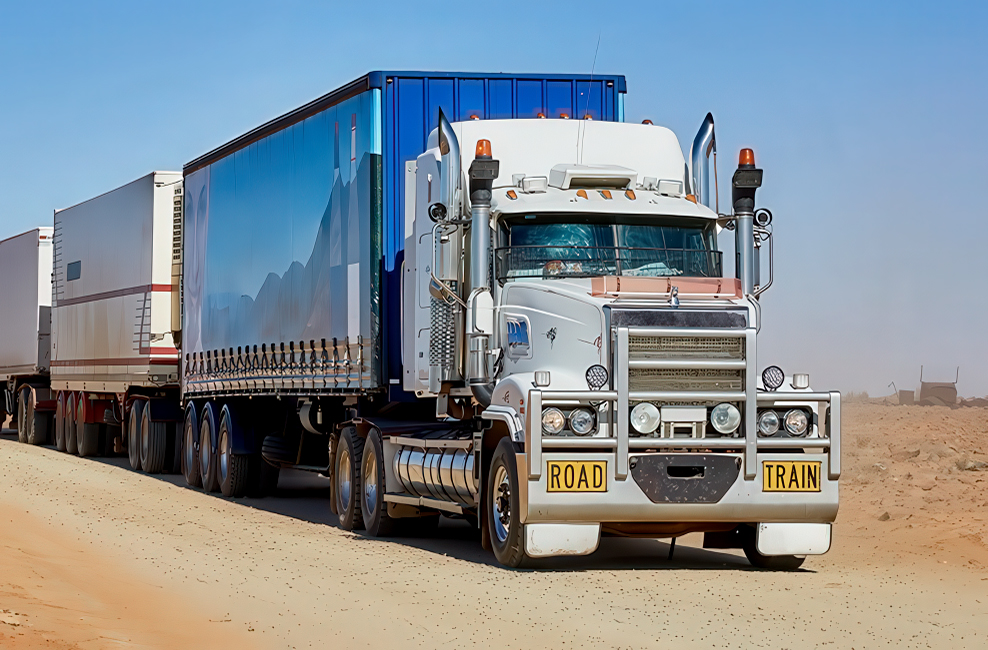
A new report examines how existing Austroads guidance addresses the geometric design requirements needed to accommodate large freight vehicles (LFVs). The report focuses on the physical space and layout required for safe and efficient LFV operations, rather than vehicle mass.
“Innovation in vehicle design has delivered major productivity gains for the road transport industry in recent years,” said Amy Naulls, Austroads Transport Network Operations Program Manager. “We’ve seen more larger vehicle combinations, and strong industry support for use of vehicles such as B-doubles.”
Road agencies in Australia and New Zealand support the use of LFVs wherever possible due to their potential to improve productivity, safety, and sustainability outcomes. However, the Austroads guides need to be updated to consider the dimensions and performance capabilities of current and future LFVs.
The report reviews several Austroads guides to identify where updates may be needed to better accommodate LFVs. These include the Austroads Guide to Road Design, Guide to Road Tunnels, Design Vehicles and Turning Path Templates, Guide to Traffic Management, and Guide to Pavement Technology.
The review summarises the current treatment of LFVs in the guides, the dimensions of common Performance Based Standards (PBS) vehicles – including forecasted growth and the drivers influencing the adoption of LFVs in the future.
“Updating Austroads guides to include the dimensions and performance of LFVs, including more PBS vehicles, will help increase the uptake of these vehicles,” said Amy. “Harmonising road design standards in this way can improve network efficiency, reduce the number of freight movements, and contribute to national goals such as Net Zero 2050.”
The report recommends targeted updates, particularly to the Austroads Guide to Road Design Part 3: Geometric Design. Updates are suggested for road cross-sections, lane and shoulder widths, intersections, turning paths, rest areas, and other elements critical for LFVs.
Additional updates would be beneficial in areas such as pavements and roadside safety features.
“Austroads is committed to ensuring our guidance reflects the capabilities of emerging vehicles,” said Amy Naulls. “By prioritising updates to critical sections of the guides, we can support safer, more efficient, and sustainable freight movements while helping designers make informed decisions that align with evolving vehicle standards.”
Download the report ‘Synthesis of Road Design Requirements for Large Freight Vehicles’ from: https://austroads.gov.au/publications/freight/ap-r745-25